
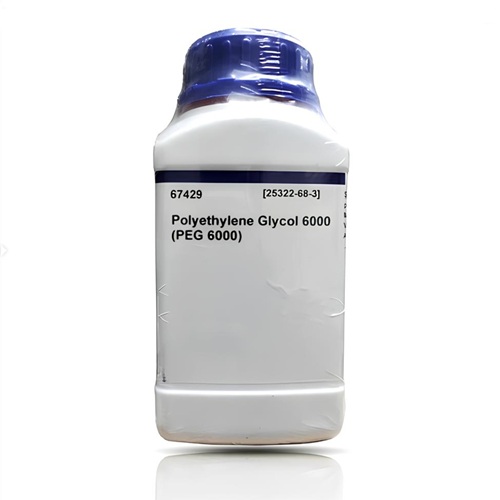
Polyethylene Glycol 6000 Reagent Lab Grade – A Reliable Polymer for Advanced Laboratory Applications
The Polyethylene Glycol 6000 Reagent Lab Grade offers exceptional purity and performance, making it ideal for laboratories that require dependable reagents for experiments involving protein precipitation, molecular biology, cell fusion, and polymer chemistry.
In modern research and scientific experimentation, high-quality lab reagents are essential for achieving precision, consistency, and reliable outcomes. Among the many versatile lab chemicals used today, Polyethylene Glycol 6000 (PEG 6000) stands out as a multifunctional polymer that supports a wide range of biochemical, pharmaceutical, and industrial applications.
What is Polyethylene Glycol 6000?
Polyethylene Glycol (PEG) 6000 is a high-molecular-weight polymer belonging to the PEG family. It typically appears as a white, waxy, free-flowing granular powder that dissolves easily in water and various organic solvents. PEG 6000 is widely used in laboratories due to its stability, non-toxicity, and compatibility with numerous biological and chemical systems.
As a reagent, PEG 6000 is essential for processes such as protein crystallization, cell fusion, sample stabilization, and formulation development.
Specifications of Polyethylene Glycol 6000 Reagent Lab Grade
Pack Size: 500gm
Origin: Germany or India
Chemical Formula: H(OCH₂CH₂)nOH
Molecular Weight (M.W.): 5000–7000
Physical Form: White or creamy waxy solid/flakes
Solubility: Soluble in water and ethanol
Cas: 25322-68-3
Appearance (Form): Flakes/Powder
Solubility (Color) 10% aq. solution: Colorless
pH (5% aq. solution): 4.5 – 7.5
Melting Point: 60 – 63°C
Viscosity (25%aq, 20°C): ~ 20 cS
Average Molecular weight: 5000 – 7000
Heavy Metals (Pb): <0.001%
Arsenic (As): <0.0003%
Key Features of Polyethylene Glycol 6000 Reagent Lab Grade
⚗️ High Purity & Laboratory Grade Quality – Ensures consistency and reproducibility in sensitive scientific experiments.
💧 Excellent Solubility – Dissolves smoothly in water and compatible solvents for easy preparation.
🔬 Chemically Stable & Non-Toxic – Safe for laboratory handling and suitable for a wide range of research applications.
📦 Free-Flowing Granular Form – Allows accurate weighing, easy mixing, and convenient storage.
🌡️ Versatile Use in Biochemical & Industrial Research – Supports protein precipitation, cell fusion, and polymer studies.
Benefits of Using Polyethylene Glycol 6000 Reagent
- Reliable Performance in Protein & Enzyme Studies: PEG 6000 is commonly used in protein precipitation and crystallization, helping researchers obtain purified and stable samples.
- Supports Molecular Biology Applications: Ideal for processes such as DNA/RNA precipitation and molecular weight control in various assays.
- Safe, Stable, and Easy to Handle: Non-toxic and chemically inert, making it suitable for educational, industrial, and advanced research laboratories.
- Enhances Pharmaceutical Formulations: Used in drug delivery systems, ointments, and controlled-release formulations due to its polymeric properties.
- High Consistency & Reproducibility: Lab-grade quality ensures minimal impurities, contributing to accurate and reliable experimental outcomes.
Applications of Polyethylene Glycol 6000 in Laboratories
- Protein Precipitation & Crystallization: Widely used in structural biology and biochemical research.
- Cell Fusion Studies: Essential in somatic cell fusion and hybridoma technology.
- DNA/RNA Precipitation: Helps concentrate nucleic acids in molecular biology workflows.
- Pharmaceutical Development: Used in tablet coatings, emulsions, and pharmaceutical formulations.
- Industrial Applications: Applied in lubricants, cosmetics, food processing, and polymer chemistry.
Conclusion
The Polyethylene Glycol 6000 Reagent Lab Grade is a highly versatile and dependable lab reagent that plays a crucial role in biochemical, molecular, and industrial research. Its high purity, excellent solubility, and stable polymeric structure make it an essential component of laboratories that demand accuracy and quality.
Whether your work involves protein studies, molecular biology, pharmaceutical formulation, or industrial research, Polyethylene Glycol 6000 offers the reliability and performance that modern laboratories depend on.


Reviews
There are no reviews yet.